|
The Lattice QCD program in nuclear physics has grown
significantly during the last several years. It is now an integral part of the
overall nuclear physics research program in the United States and elsewhere,
contributing and, in some cases, underpinning the experimental program, as highlighted
in the figure below.
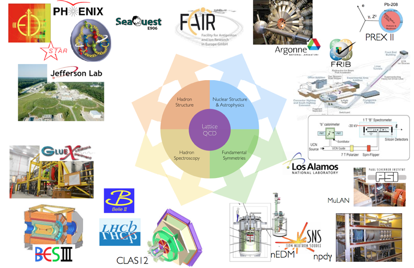
Figure 1: Lattice QCD is an integral part of the nuclear physics research program in the United States, and elsewhere.
At present the research thrusts that can be broadly
classified under coldQCD and hotQCD. ColdQCD is an umbrella for
investigations into the structure of hadrons, the spectroscopy of hadrons and
the interactions between hadrons. HotQCD covers the behavior of matter
under extreme conditions, such as systems at finite temperature and finite
density. USQCD work supports, guides and complements the research programs
of the experimental facilities. The recent Nuclear Physics Long Range
Plan has the field spawning a significant program in fundamental symmetries along
with re-orienting QCD-related research toward the gluonic structure of the
nucleon and nuclei. Our research efforts are evolving to support these
new foci.
Important aspects of the Lattice QCD calculations in nuclear
physics differ from those in particle physics. Spacetime volumes containing
the quantum fluctuations of the gluon fields need to be larger to accommodate nuclei,
operator structure need to be more comprehensive to distinguish between closely
spaced multi-hadron energy levels and the number of quark contractions required
to describe multi-nucleon systems is significantly greater than for a single
hadron. Algorithms, software and workflows to handle these unique
challenges continue to be pioneered by the USQCD collaboration.
Hadronic Spectroscopy
Exploring the spectra of baryon and meson states continues
to reveal crucial information about the nature of matter. Our long-standing
Lattice QCD program in this area is making remarkable progress. In
addition, to precisely mapping out a significant number of states in spectra
associated with experimentally-known quantum numbers, we have identified a
number of exotic states corresponding to intrinsically gluonic excitations of
matter, an example of which is shown in the figure below.
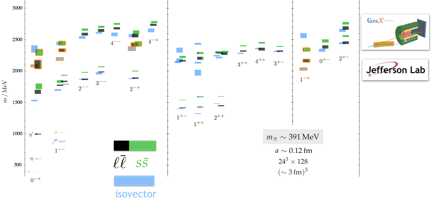
Figure 2: The meson excitation spectrum calculated at a pion mass of approximately 400 MeV,
including exotic states that directly probe the gluonic sector (USQCD’s Hadron Spectrum Collaboration).
The technology (algorithms and software) that has been
developed for these purposes has recently been extended to explore resonances
with precision and to provide first calculations of multi-hadron matrix
elements required for the study of electroweak processes, see the figure below.
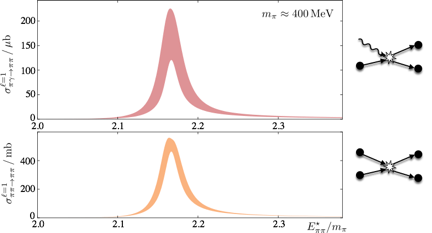
Figure 3: The pion-pion scattering cross section in the
channel containing the rho resonance (which is clearly visible) as calculated
by USQCD’s Hadron Spectrum Collaboration. Also shown is the cross section
for pion photo-production off the pion in this same channel.
The Structure of Hadrons
USQCD has a strong program in researching the structure of
the mesons and baryons. This is currently focused on precisely
determining properties of the nucleon, such as gA, parton
distributions and generalized parton distributions, is charge, magnetic and
axial radii, and its spin and mass decomposition. These are all
quantities that directly impact the nuclear physics experimental program.
As an example, and surprisingly, atomic experiments involving muons have shown
that the proton charge radius is less well known that previously thought and
that there is a significant discrepancy between electronic and muonic
measurements, see the figure below. USQCD’s LHP Collaboration has been
working to reduce the uncertainties in Lattice QCD calculations near the
physical point to produce a purely theoretical value for the proton charge
radius.
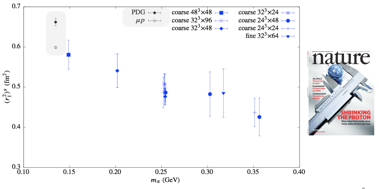
Figure 4: The isoscalar charge radius of the proton
determined by USQCD’s LHP Collaboration (2014).
Nuclear Forces and Nuclei
The properties and interactions of nuclei result from the
complex low-energy dynamics of quarks and gluons that emerge from the
spontaneous breaking of the chiral symmetries and the confinement of
color. Lattice QCD calculations are rapidly moving toward refining the modern-day
chiral nuclear forces in a way that will complement results that are expected
from the FRIB experimental program that will soon commence. Combined,
they will enable the properties of nuclei to be greatly refined and the
structure and properties of dense matter, such as found in explosive
astrophysical environments, to be reliably determined. As an example, the
figure below shows that the magnetic moments of the nuclei are very close to
the sum of the contributions from the nucleons alone over a large range of pion
masses, indicating the nuclear shell model is robust to modest changes to the
light-quark masses. In the last year, the first calculation of an
inelastic nuclear reaction,
n+p → d+ γ, was
accomplished.
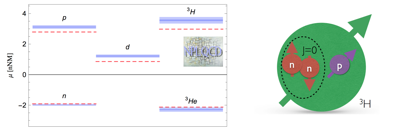
Figure 5: The magnetic moments of light nuclei calculated
at a pion mass of approximately 800 MeV (blue bands) by USQCD’s NPLQCD
collaboration. The dashed red lines correspond to the experimental
values.
Fundamental Symmetries
USQCD has a long-standing program in fundamental symmetries
in Lattice QCD, from calculations of the neutron electric dipole moment (edm) (indicative
of the violation of time-reversal), to matrix elements of quark-bilinears in
the nucleon required for analysis of precision experiments measuring properties
of neutron beta-decay, through first calculations of hadronic parity violation,
and axial properties of light nuclei (as part of preparing for planned double
beta-decay experiments). One recent focus has been the determination of
the contribution from light-quark edms to the edm of the neutron, as shown in
the figure below. This work involves calculation nucleon matrix elements
of the tensor quark bilinear, and the present precision is at the 10-percent
level. Efforts are underway to systematically reduce the uncertainties in
these calculations.
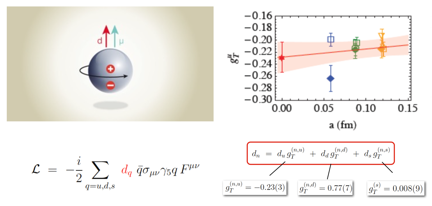
Figure 6: The strength of quark electric dipole moment
contributions to the neutron electric dipole moment, as calculated by USQCD’s
PNDME collaboration.
| 